Rosbag replay simulation#
Preparation#
Download the sample map and rosbag#
Use the demo_artifacts ansible role to download and extract both the sample map and the sample rosbag. Run these commands in the root folder of the autoware repository:
cd ~/autoware
ansible-galaxy collection install -f -r "ansible-galaxy-requirements.yaml"
ansible-playbook autoware.dev_env.install_dev_env --tags demo_artifacts --ask-become-pass
After running the role:
- sample map →
~/autoware_data/maps/sample-map-rosbag/ - sample rosbag →
~/autoware_data/recordings/bags/sample-rosbag/
Make sure the ML model artifacts are downloaded#
Check if you have ~/autoware_data/ml_models folder and files in it.
$ cd ~/autoware_data/ml_models
$ ls -C -w 30
bevfusion
calibration_status_classifier
camera_streampetr
diffusion_planner
image_projection_based_fusion
lidar_apollo_instance_segmentation
lidar_centerpoint
lidar_frnet
lidar_transfusion
ptv3
simpl_prediction
tensorrt_bevdet
tensorrt_yolox
traffic_light_classifier
traffic_light_fine_detector
vad
yabloc_pose_initializer
If not, download them with the artifacts ansible role.
Info
- Sample map and rosbag: Copyright 2020 TIER IV, Inc.
- Due to privacy concerns, the rosbag does not contain image data, which will cause:
- Traffic light recognition functionality cannot be tested with this sample rosbag.
- Object detection accuracy is decreased.
How to run a rosbag replay simulation#
If you prefer a graphical user interface (GUI) over the command line for launching and managing your simulations, refer to the Using Autoware Launch GUI section at the end of this document for a step-by-step guide.
Launch Autoware.
source ~/autoware/install/setup.bash
ros2 launch autoware_launch logging_simulator.launch.xml map_path:=$HOME/autoware_data/maps/sample-map-rosbag vehicle_model:=sample_vehicle sensor_model:=sample_sensor_kit
Note that you cannot use
~instead of$HOMEhere.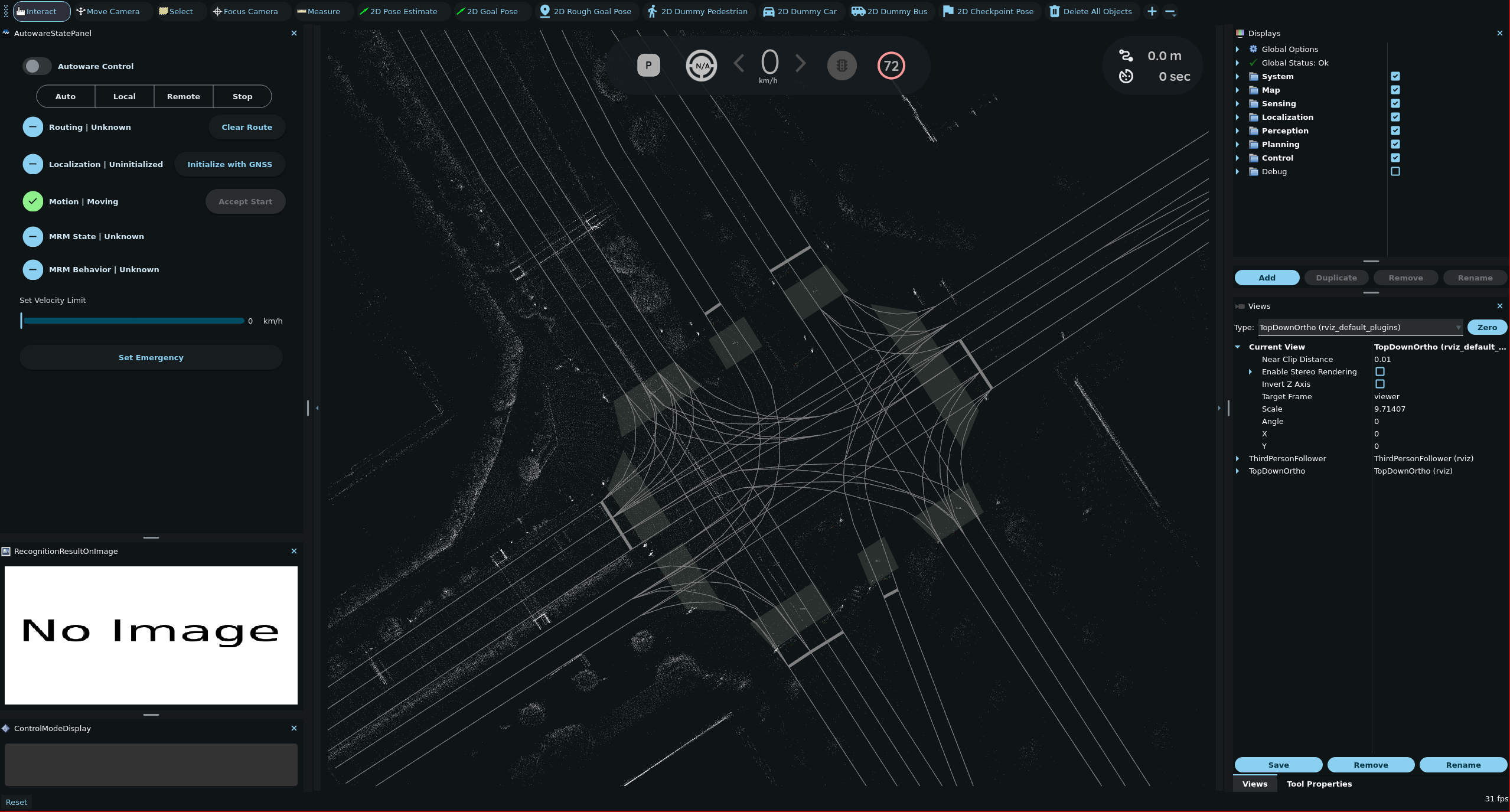
⚠️ You might encounter error and warning messages in the terminal before playing the
rosbag. This is normal behavior. These should cease once therosbagis played and proper initialization takes placePlay the sample rosbag file.
source ~/autoware/install/setup.bash
ros2 bag play ~/autoware_data/recordings/bags/sample-rosbag/ -r 0.2 -s sqlite3
⚠️ Due to the discrepancy between the timestamp in the
rosbagand the current system timestamp, Autoware may generate warning messages in the terminal alerting to this mismatch. This is normal behavior.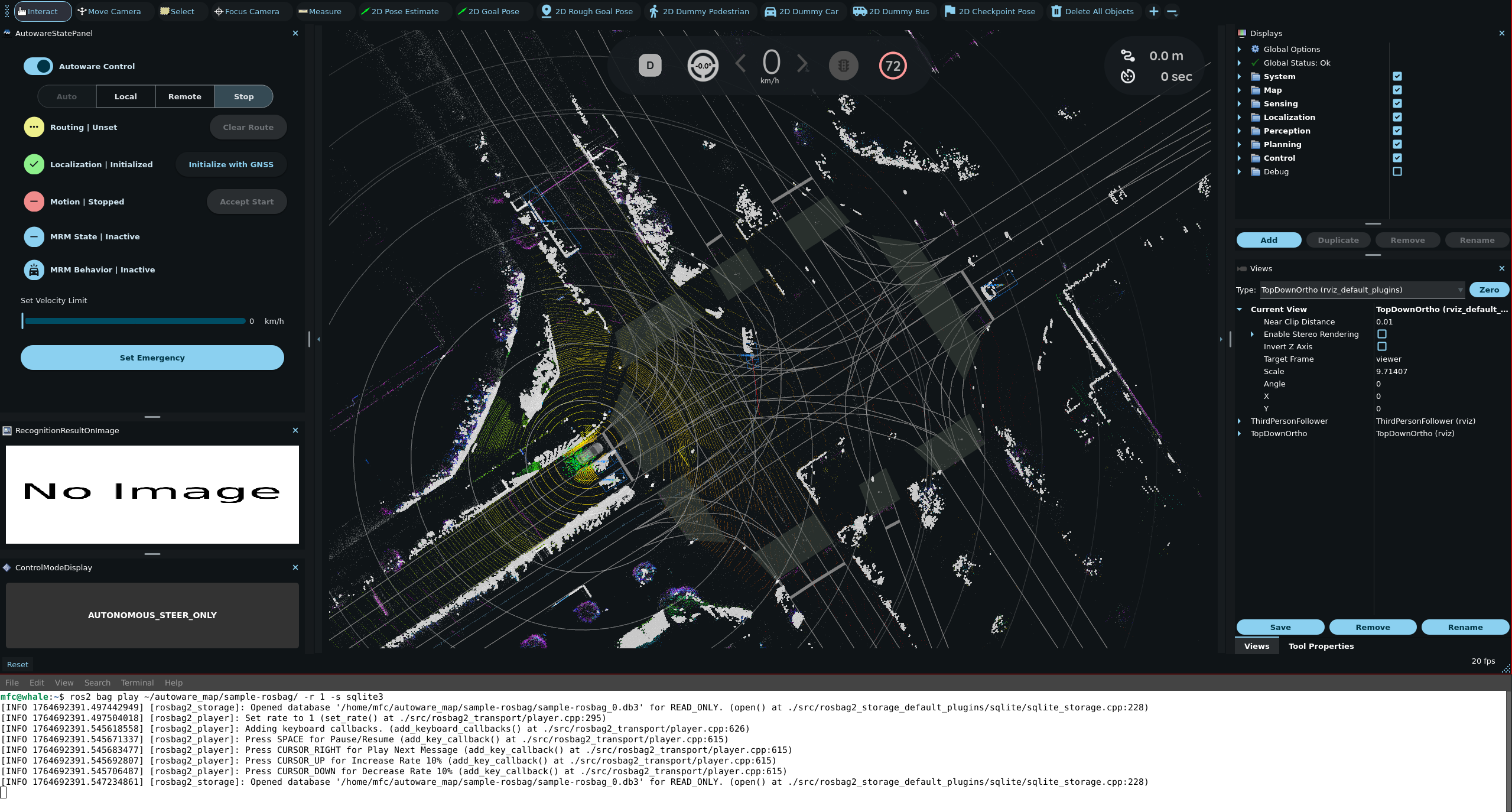
To focus the view on the ego vehicle, change the
Target Framein the RViz Views panel fromviewertobase_link.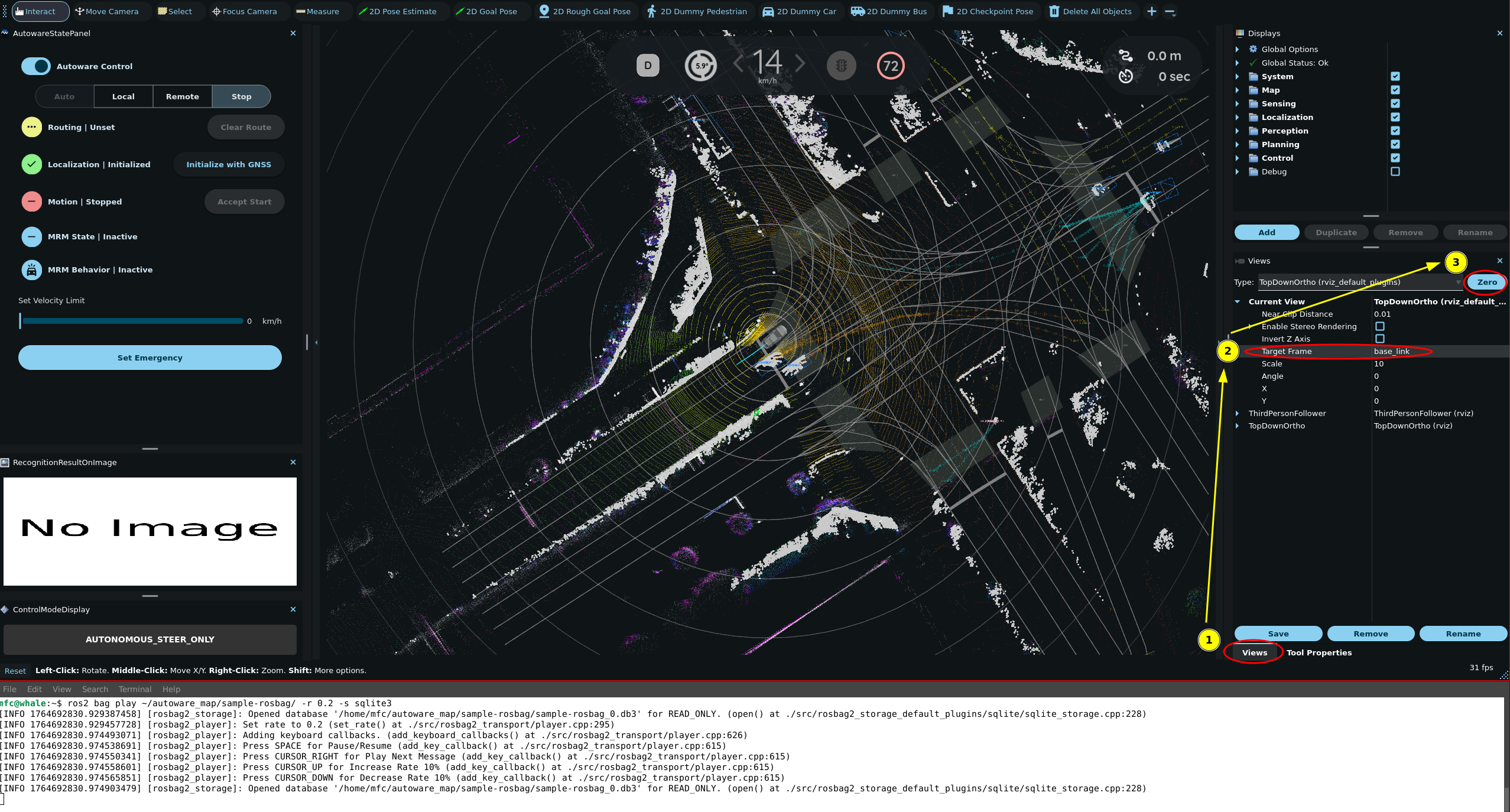
To switch the view to
Third Person Followeretc, change theTypein the RViz Views panel.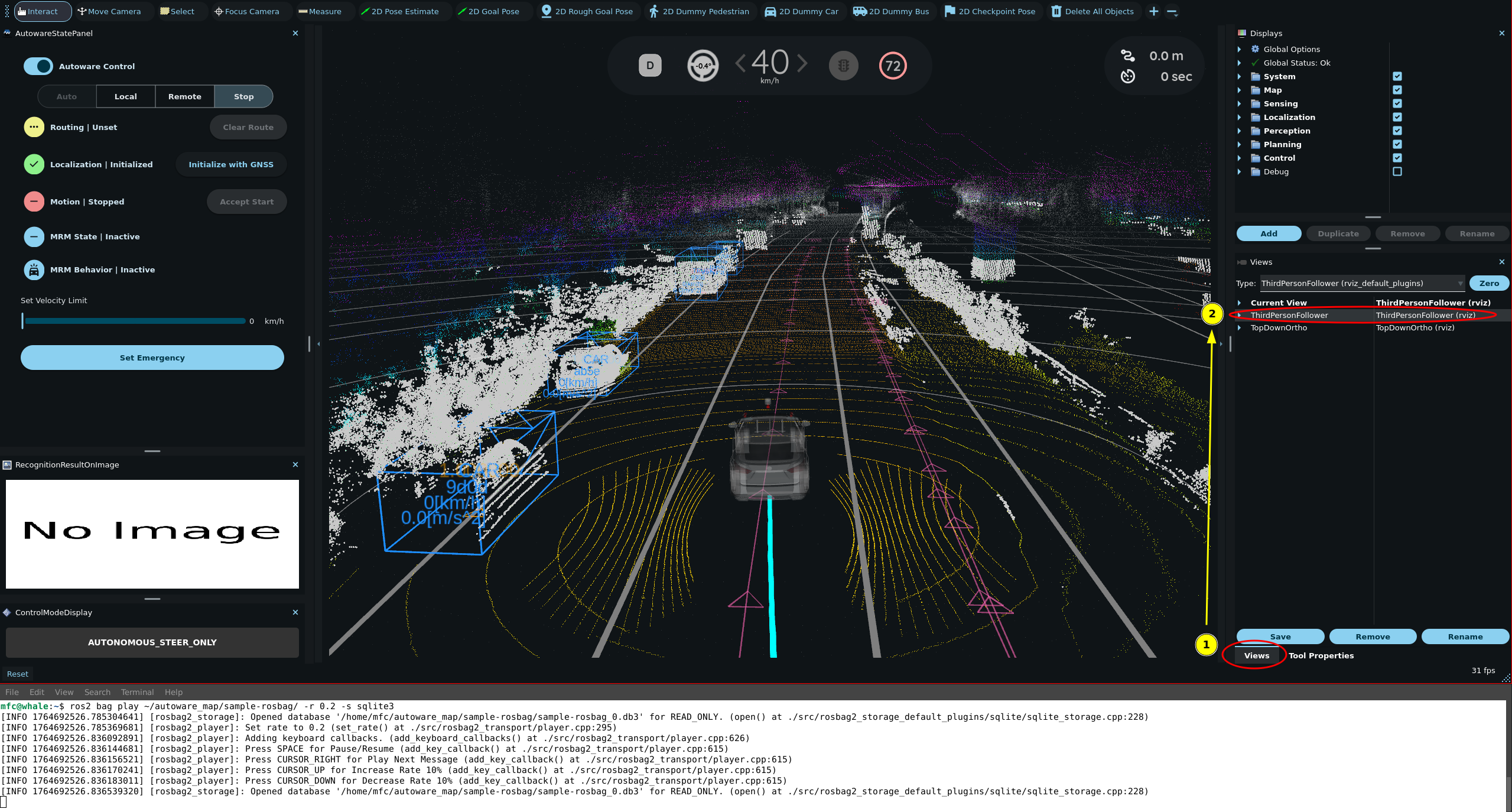
Using Autoware Launch GUI#
This section provides a step-by-step guide for using the Autoware Launch GUI to launch and manage your rosbag replay simulation. It is an alternative to the command-line instructions provided in the previous section.
Getting Started with Autoware Launch GUI#
Installation: Ensure you have installed the Autoware Launch GUI. Installation instructions.
Launching the GUI: Open the Autoware Launch GUI from your applications menu.
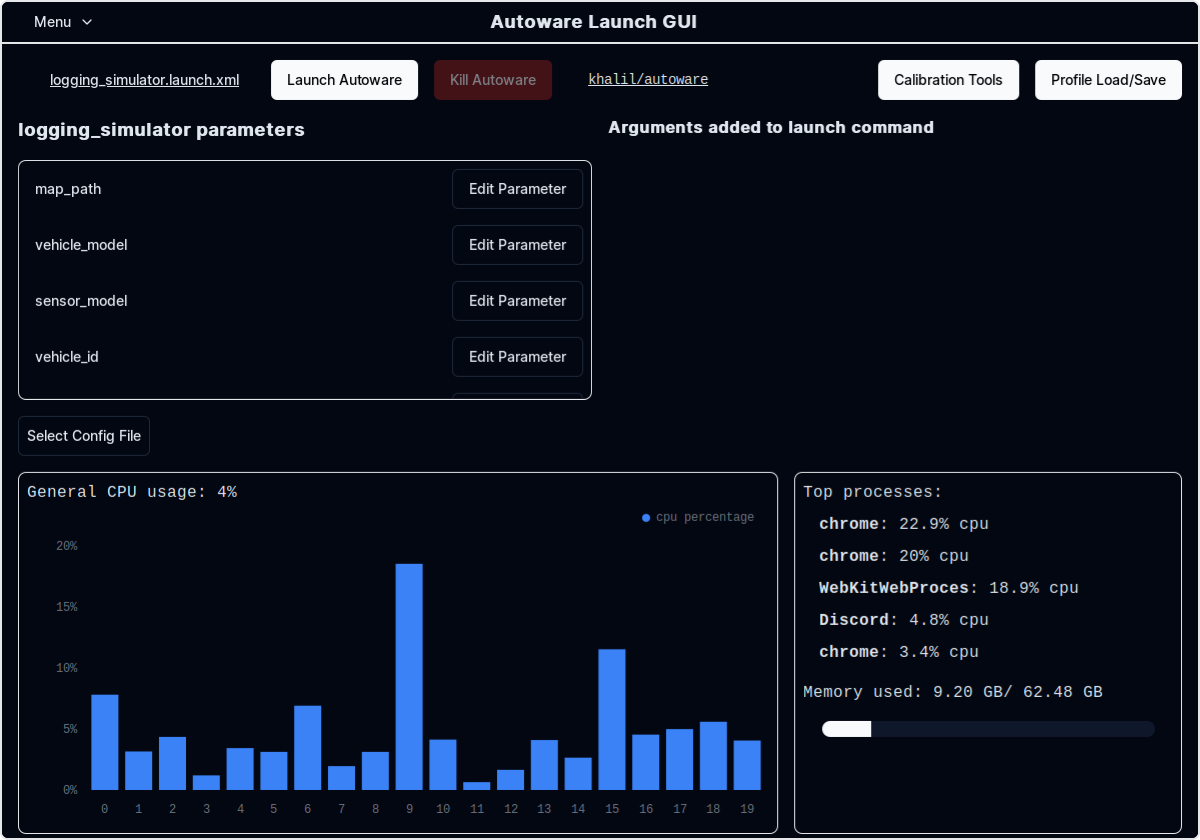
Launching a Logging Simulation#
- Set Autoware Path: In the GUI, set the path to your Autoware installation.
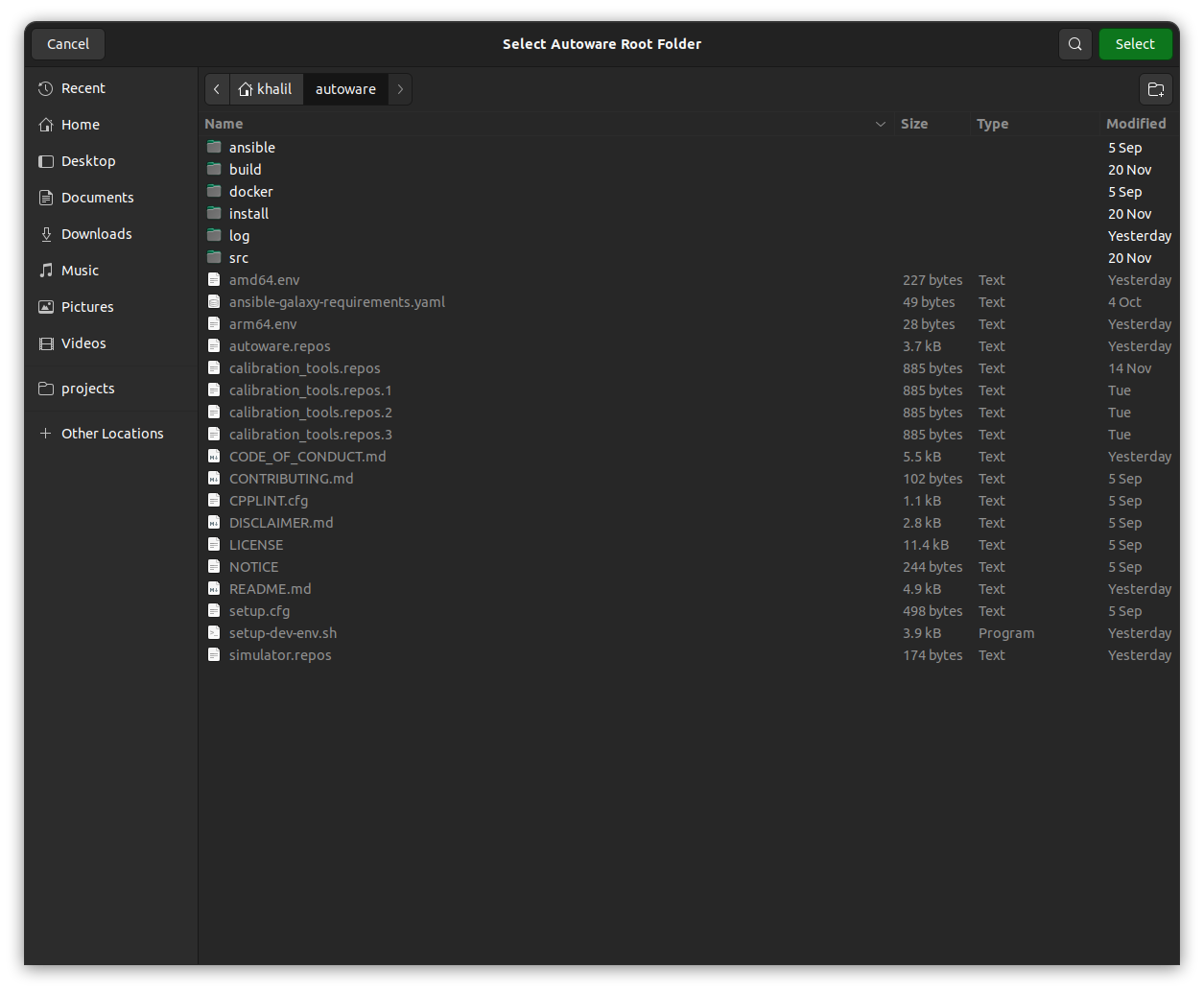
- Select Launch File: Choose
logging_simulator.launch.xmlfor the rosbag replay simulation.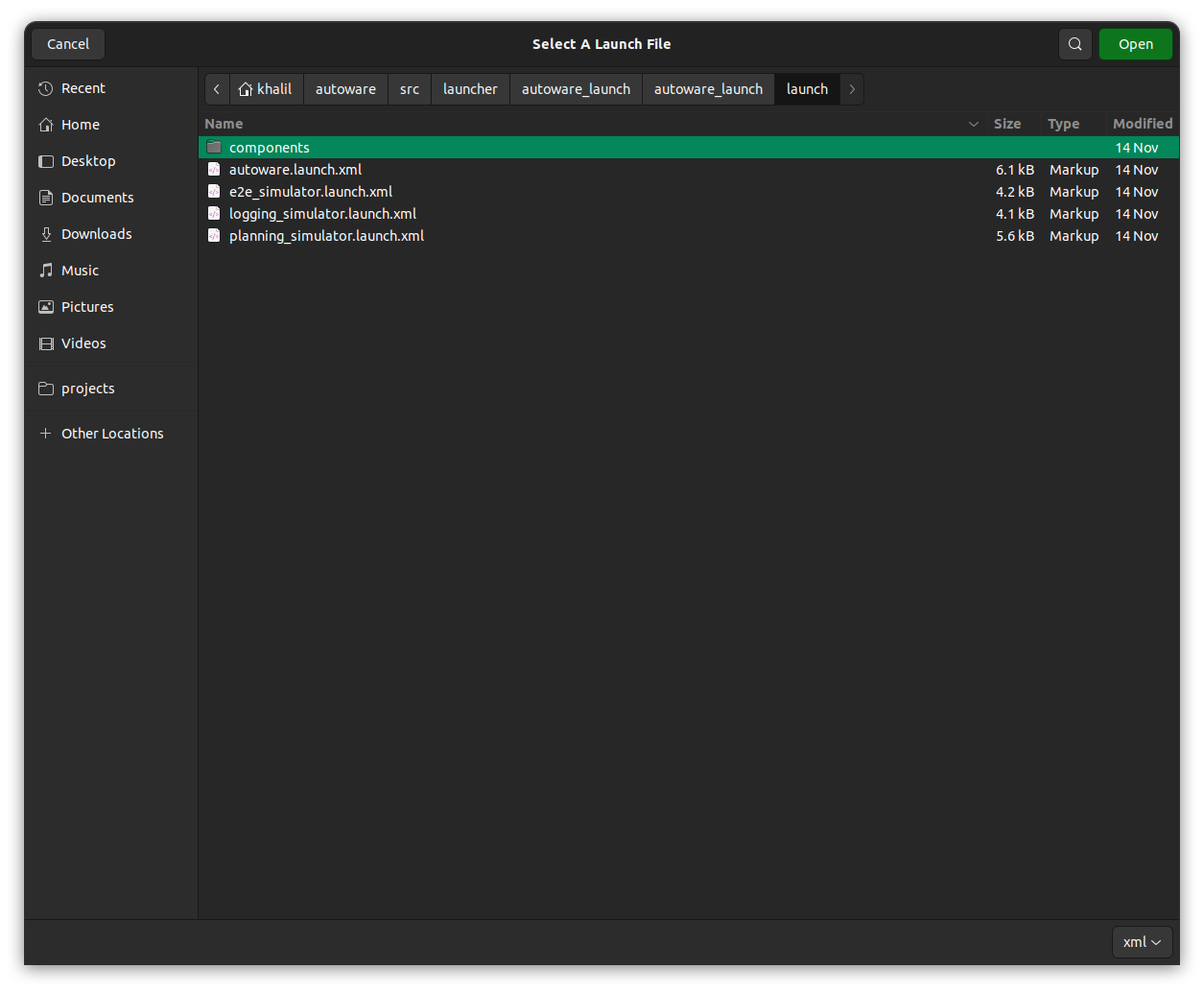
Customize Parameters: Adjust parameters such as
map_path,vehicle_model, andsensor_modelas needed.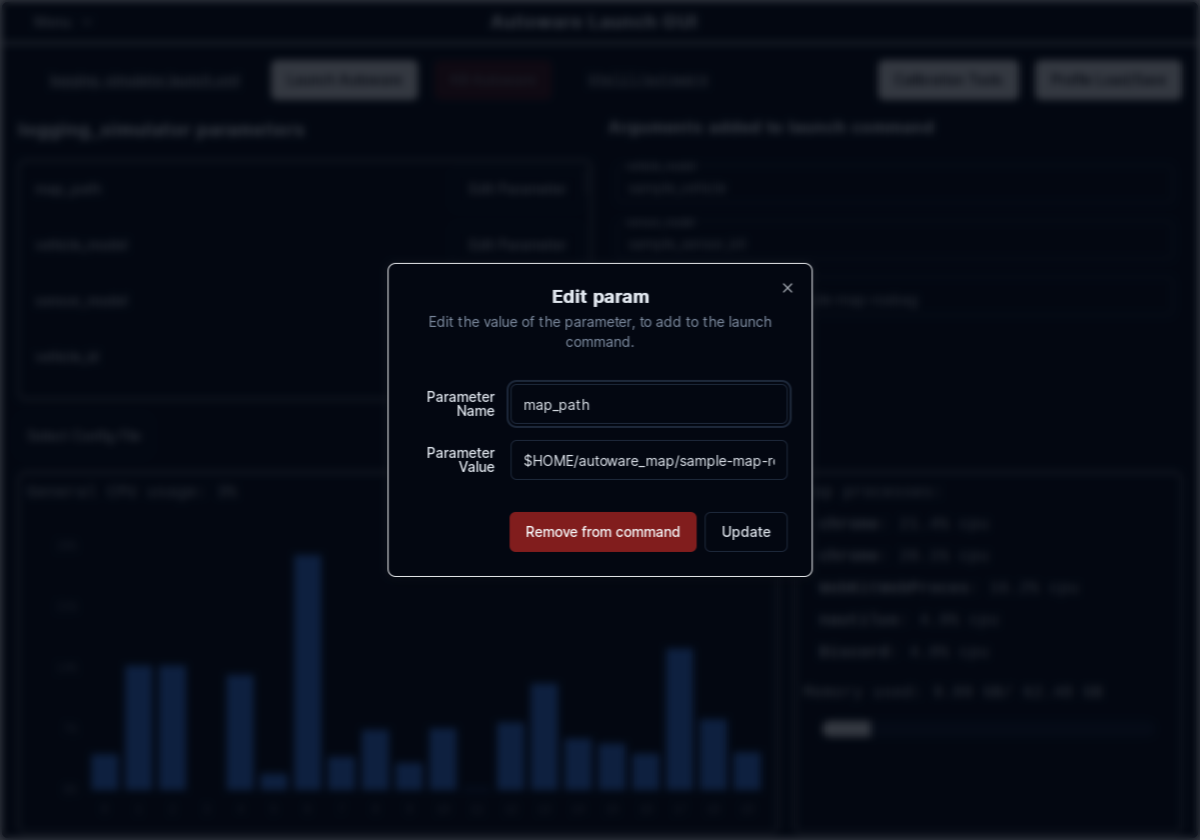
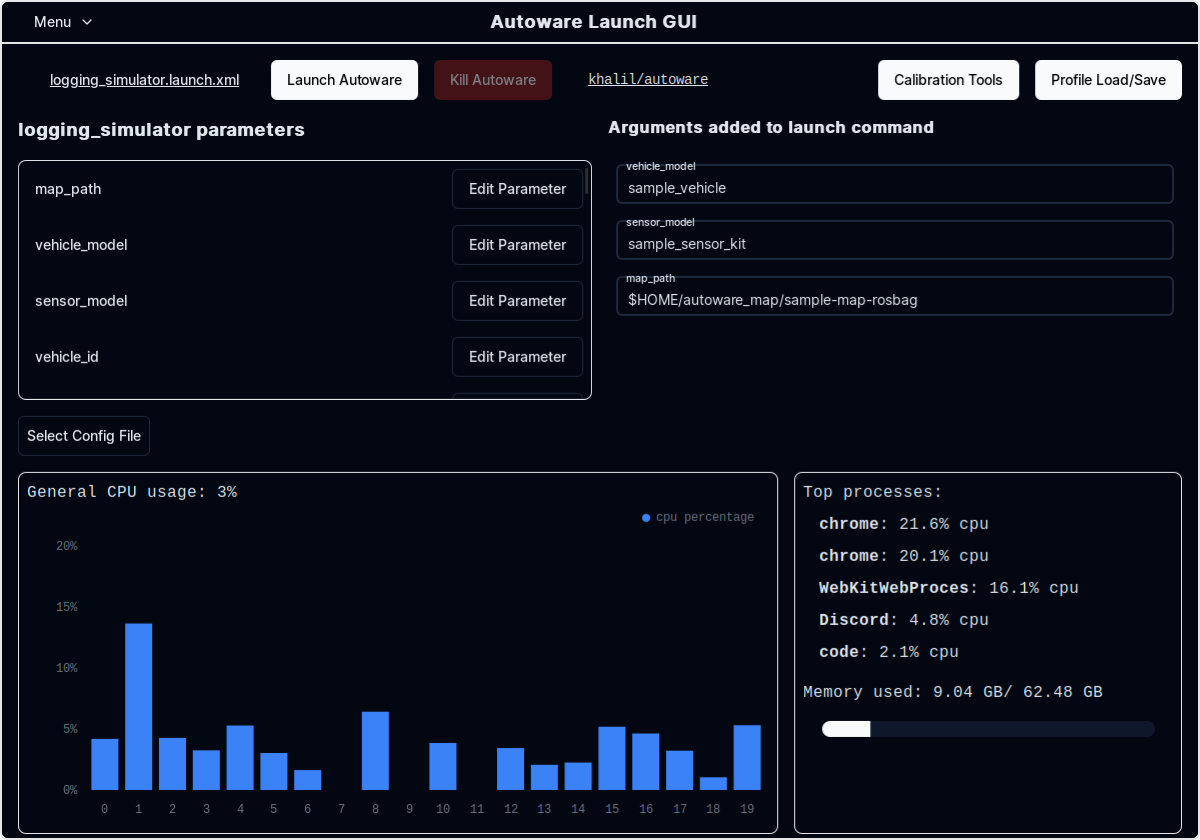
Start Simulation: Click the launch button to start the simulation and have access to all the logs.
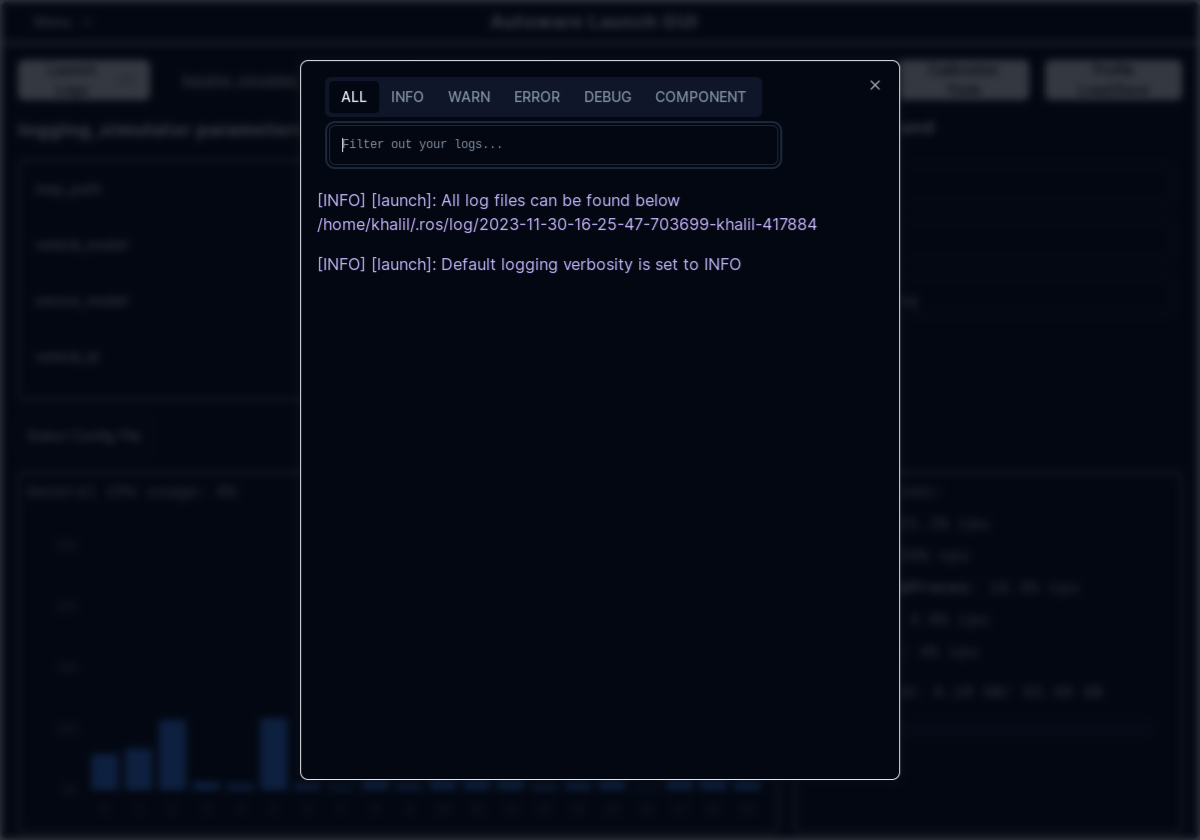
Play Rosbag: Move to the
Rosbagtab and select the rosbag file you wish to play.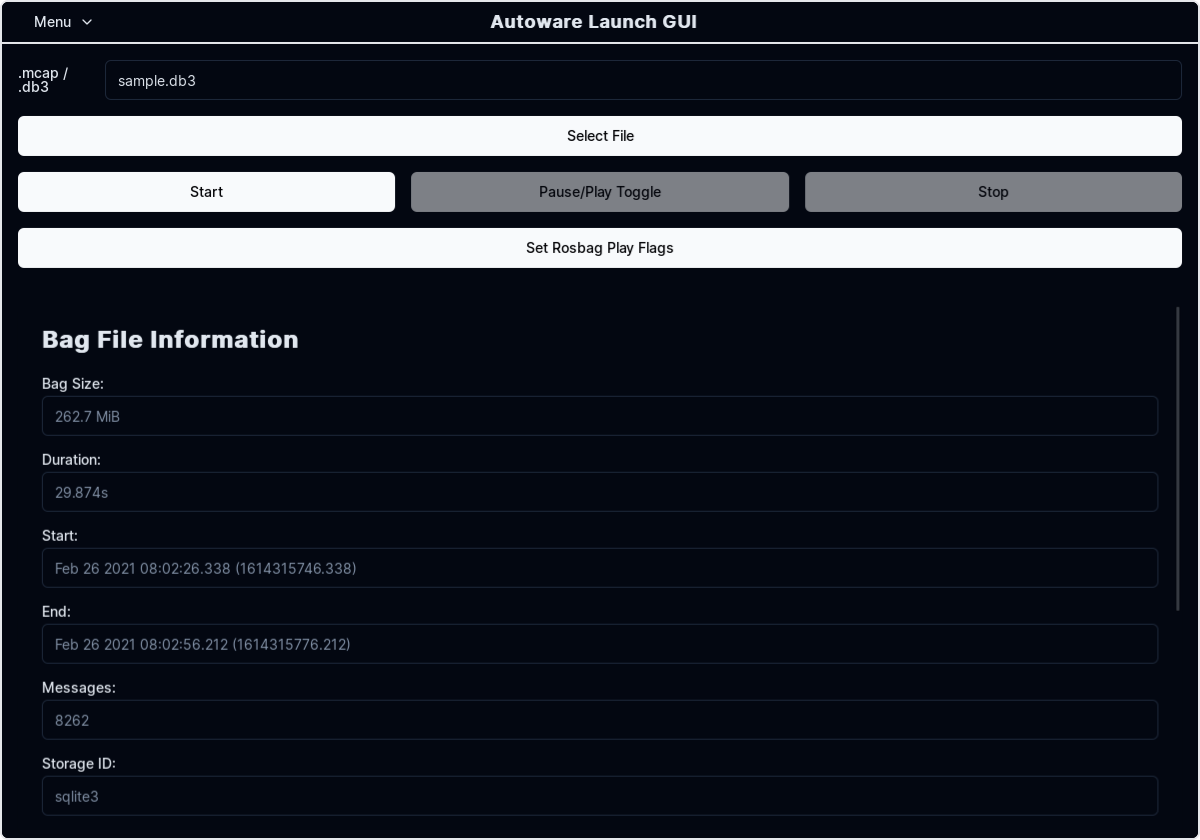
Adjust Playback Speed: Adjust the playback speed as needed and any other parameters you wish to customize.
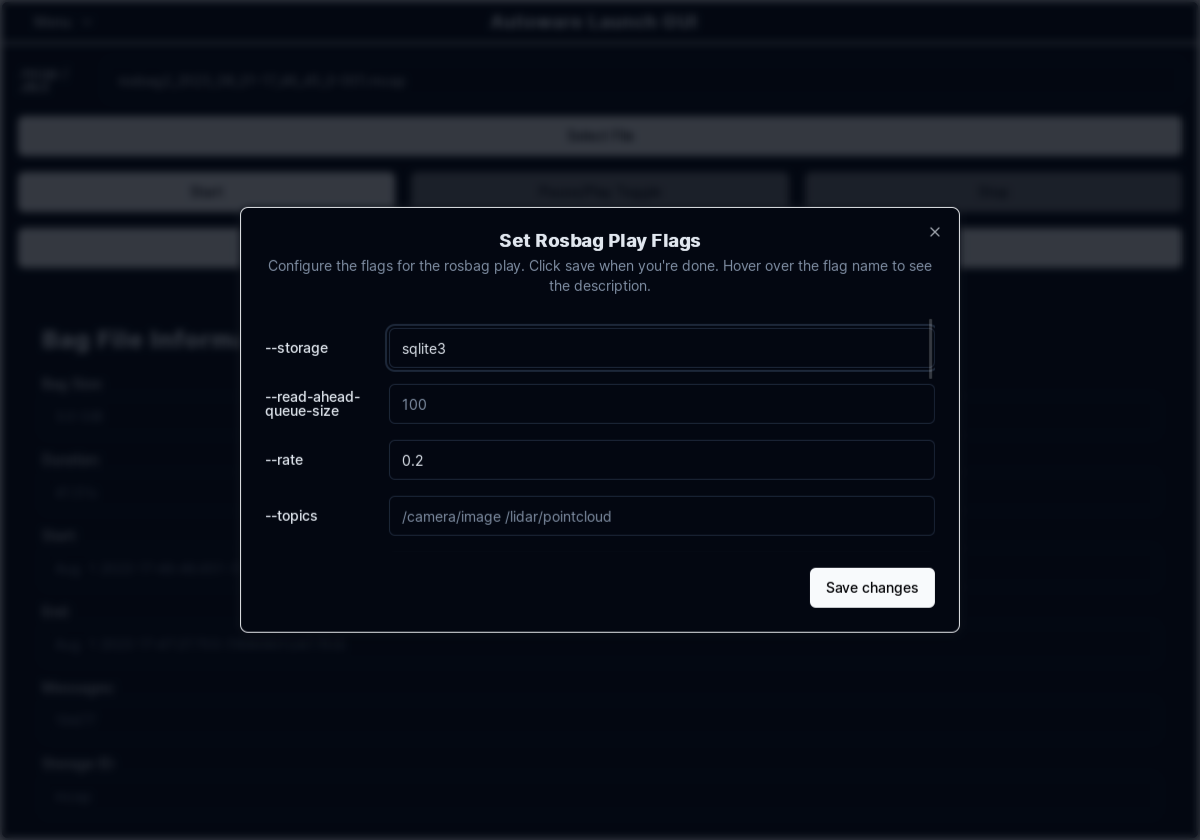
Start Playback: Click the play button to start the rosbag playback and have access to settings such as
pause/play,stop, andspeed slider.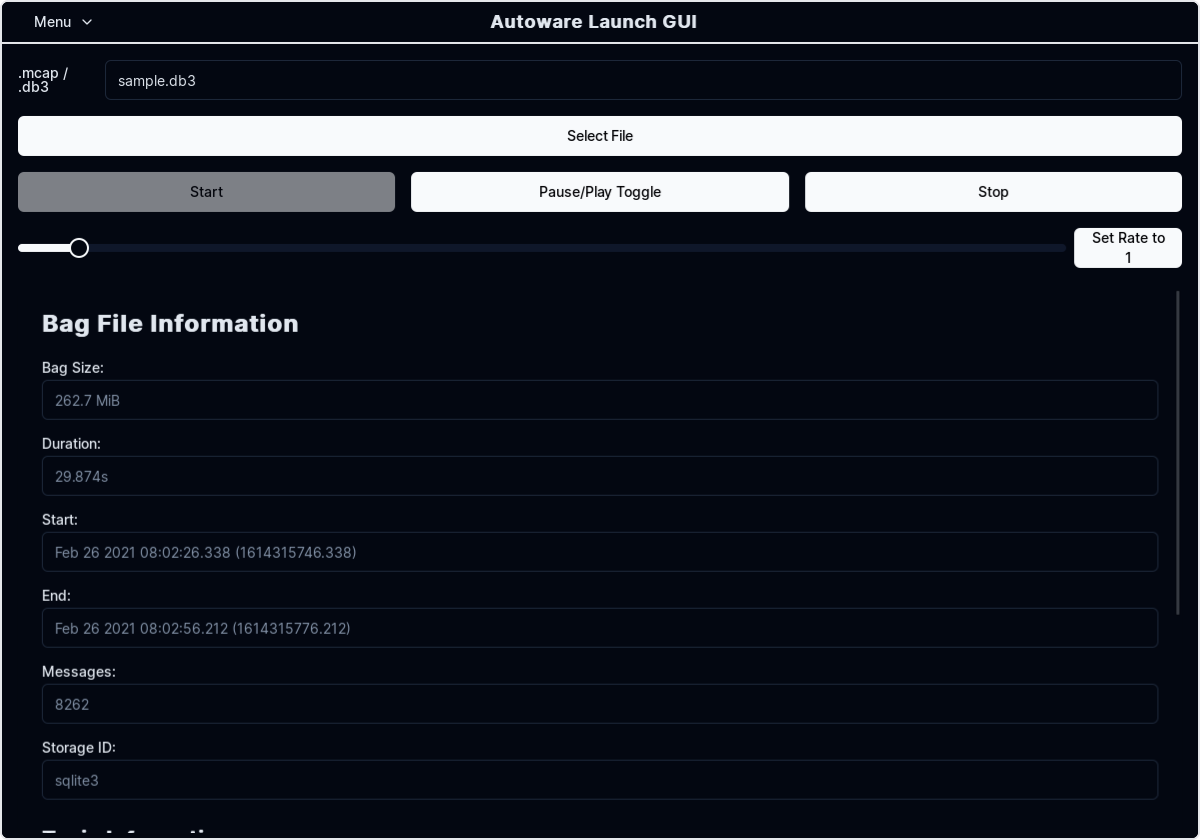
View Simulation: Move to the
RVizwindow to view the simulation.To focus the view on the ego vehicle, change the
Target Framein the RViz Views panel fromviewertobase_link.To switch the view to
Third Person Followeretc, change theTypein the RViz Views panel.